
What is a BAFO? Best and Final Offer Explained
A BAFO is the final pricing round in a tender. How it works, when to run one, how to keep it fair and what savings to expect.
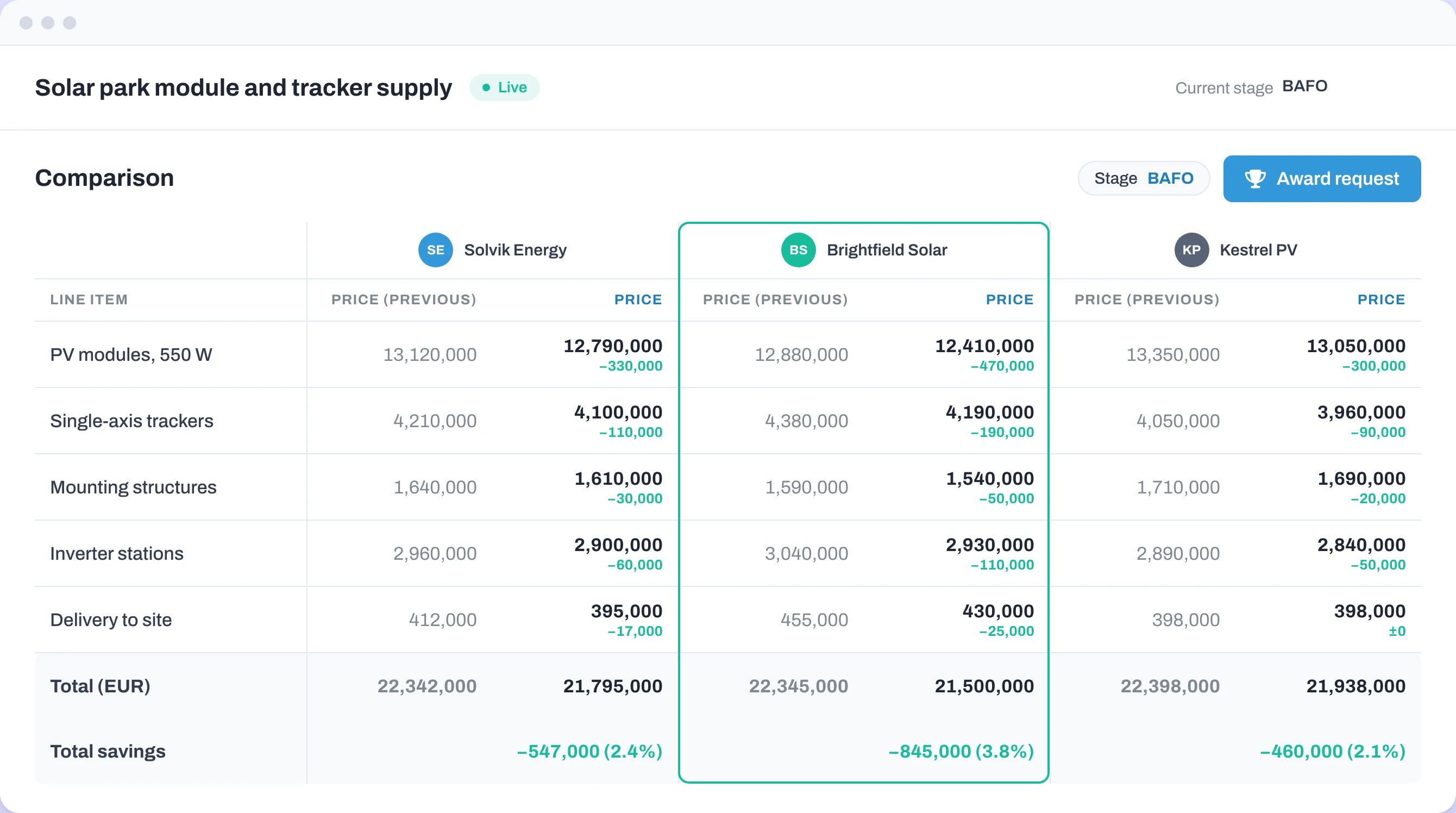
A BAFO, or best and final offer, is a last round in a tender where the buyer asks shortlisted suppliers to submit their best price and terms, on the understanding that there will be no further negotiation. It sits between the first round of bids and the award, and it gives suppliers one clear chance to improve their offer against the same rules and the same deadline.
This guide covers how a BAFO works, when it is worth running one, how to keep it fair, how it is treated in public procurement, and what results buyers can expect.
What does BAFO stand for?
BAFO stands for best and final offer. You will also see it written as BAFO round, BAFO stage or final offer stage. In US federal contracting the formal term is now final proposal revision, but the idea is the same: a written, final submission from each supplier still in the running.
How a BAFO round works
Most BAFO rounds follow the same six steps.
- Run the first round. Suppliers respond to an RFP, RFQ or tender with their prices, technical proposals and supporting documents.
- Evaluate and shortlist. The buyer scores the responses against the published criteria and decides which suppliers have a realistic chance of winning. These are the ones invited back.
- Issue the BAFO request. The request sets out what suppliers may change (usually price, and sometimes specific terms or scope), the deadline, the format of the response and the fact that this is the final round.
- Suppliers resubmit. Each shortlisted supplier prices the same line items again and confirms any changed terms in writing.
- Compare first and final offers. The buyer lines up each supplier's original and final price, line by line, and re-scores against the same criteria used in round one.
- Award. The contract goes to the best offer under the published criteria, with the record of both rounds kept for audit.
The step that most often goes wrong is the third. A vague BAFO request invites suppliers to change things the buyer never meant to reopen, which makes the final offers hard to compare.
When to run a BAFO
A BAFO is worth the extra time when one or more of these is true:
- The leading bids are close. When two or three suppliers are within a few percent of each other, a final round often separates them.
- Prices came in above budget. A BAFO tells suppliers plainly that the current numbers will not win, without opening an open-ended negotiation.
- The scope changed after round one. Clarification questions often tighten the requirement. A BAFO lets every supplier price the clarified scope on the same basis.
- The contract is large enough to justify it. On a high-value tender, a small percentage movement in price is worth a week of extra process.
When not to run one
- Only one compliant bid. With no competition left, a BAFO is just a negotiation by another name.
- Price is the only thing left to settle. If the specification is fixed and suppliers are already qualified, a live reverse auction will usually move prices further and faster.
- You told suppliers there would be no further round. Changing the rules part way through damages trust and, in public procurement, can be challenged.
- Low-value or routine purchases. The effort of a second round can cost more than it saves.
BAFO, negotiation or reverse auction?
All three aim to improve the price, but they work differently.
A BAFO is a single, sealed, written round. Each supplier submits once, without seeing competitors' prices, and the buyer compares the final offers against the full set of award criteria. It suits tenders where quality and terms matter as well as price.
Negotiation is a conversation with each supplier, often over several meetings. It is flexible but harder to keep even-handed, and the record of what was offered to whom is easy to lose.
A reverse auction is a live, timed event where suppliers bid the price down against each other. It is the strongest tool when price is the deciding factor and the specification is fully defined. See reverse auctions explained for how they work.
How to run a fair BAFO
A final round only works if suppliers trust it. These rules keep it fair and defensible.
- Give every shortlisted supplier the same information. Any clarification shared with one goes to all of them.
- Set one deadline for everyone. Late or partial final offers should be treated exactly as the BAFO request says they will be.
- Say clearly that it is the final round, and mean it. Asking for a second BAFO teaches suppliers to hold back in the first one.
- Never reveal a competitor's price. Telling a supplier where it ranks or what it needs to beat turns a sealed round into an informal auction.
- Evaluate against the published criteria. The BAFO changes the offers, not the rules for judging them.
- Keep the full record. Hold each supplier's first and final price side by side, with the dates and the request that was sent, so the award can be explained months later.
BAFO in public procurement
Public buyers can use a final offer round, but only within the procedure they set out at the start.
In the UK, the Procurement Act 2023 came into force on 24 February 2025. Its competitive flexible procedure lets contracting authorities design their own process, including negotiation and more than one round of tendering, provided the process is described in the tender documents from the outset. A BAFO stage should therefore be planned and published, not added once bids are in.
In US federal contracting, the Federal Acquisition Regulation uses the term final proposal revision (FAR 15.307). At the end of discussions, each offeror still in the competitive range is given the chance to submit a final proposal revision, in writing, by a common cut-off date, and is told that the government intends to award without asking for further revisions.
Rules differ by country and sector, so public buyers should check the procedure they are using before adding a final round.
What savings can a BAFO deliver?
Results depend on the category, the number of suppliers and how competitive the first round was. Across DeepStream customers, tenders that ran a final BAFO round saved an average of 14% against budget.
Manufacturer Ferroglobe France runs a best and final stage as standard on its tenders, as a second stage after initial proposals.
Running a BAFO in DeepStream
In DeepStream, a BAFO is a stage in the same sourcing event as the first round. Buyers compare round-one bids, move the shortlist to a final stage with its own deadline, and suppliers re-price the same line items while their earlier prices stay on record. Previous and final prices sit side by side with the savings per supplier, and every round is kept in the audit trail. See how it works on the BAFO feature page.
Frequently asked questions
What is the difference between a BAFO and a final proposal revision?
They describe the same thing. Final proposal revision is the term used in US federal contracting under FAR 15.307. BAFO is the more common term elsewhere and in private sector procurement.
How many suppliers should be invited to a BAFO?
Usually two or three. Enough to keep real competition, few enough that each supplier believes it has a fair chance of winning and puts in a genuine final offer.
Can a buyer ask for a second BAFO?
It is possible, but it is best avoided. If suppliers expect another round, they hold back in the first one, and in public procurement an unplanned extra round can be open to challenge.
Is a BAFO binding on the supplier?
A BAFO is normally submitted as a formal offer under the terms of the tender, so suppliers should treat it as an offer they are prepared to sign. Whether and when it becomes binding depends on the tender documents and the governing law.
Should a BAFO be about price only?
Not necessarily. Many BAFO requests also allow changes to delivery terms, payment terms or specific parts of the scope. The request should state exactly what may change so that final offers can be compared fairly.